


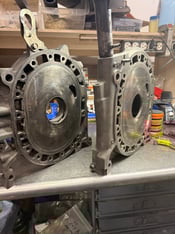
 Rebuilding the 12A for Vintage Racing: What Actually Matters
Go to any SCCA road racing event and you’ll still see Mazda RX-7 cars running hard down the straights with 12A engines.
That alone tells you something—when built right, the 12A is still a competitive, reliable racing platform decades later.
But here’s the reality most people don’t talk about:
Not all 12A builds survive track use.
🔧 Why the 12A Still Works in Vintage Racing
The 12A has been around since the early 1970s, and it earned its place the hard way—high RPM capability, simplicity, and durability when properly set up.
It’s not a torque motor. Compared to the 13B, it gives that up.
But at the top end?
It’s a screamer.
And in a lightweight chassis, that matters.
🛠️ Where Most 12A Race Builds Go Wrong
A lot of engines “run”—but that doesn’t mean they’re built for sustained high RPM track use.
The difference shows up in:
-
Bearing life
-
Oil control
-
Heat management
-
Seal stability
- How it was assembled
These aren’t theoretical problems—we see them regularly in engines that were “fresh builds.”
⚙️ What Actually Makes a 12A Reliable on Track
There’s no single trick. It’s a system.
A proper vintage racing 12A build typically includes:
-
Correct porting strategy (not just bigger—balanced)
-
Rotor clearancing for sustained RPM
-
Proper side seal and apex seal selection
-
Oil system upgrades that address real-world track conditions (especially here in Colorado)
We often:
-
Add front oiling to improve bearing lubrication
-
Open up oil galleys for better flow
-
Use upgraded oil pumps when applicable
-
Install baffled oil pans to control aeration if you are using a factory type sump.
-
Run high-capacity systems like Setrab coolers for temperature stability
-
Because once oil control goes… everything follows.
🔩 Parts Availability Is Getting Harder
One of the biggest challenges today isn’t building the engine—it’s finding usable cores.
Most 12A engines have been:
-
Overworked
-
Poorly rebuilt
-
Or pieced together over decades
We regularly see customers bringing in multiple engines hoping to make one good one.
That’s often the reality now. We now have the option of having 13B rotor housings cut down, this helps a lot.
🧠 Experience Still Matters
There are a lot of “tricks” floating around.
But what separates a strong 12A from a short-lived one is understanding:
What actually works together
What tolerances matter (and where)
What can be pushed—and what shouldn’t
That doesn’t come from theory. It comes from time.
🏁 A Proven Platform—When Done Right
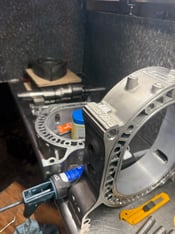 I still have my original 12A bridgeport sitting in the corner of the shop.
That engine made it to the Runoffs every time I put in the effort and produced 265+ hp reliably.
That didn’t happen by accident.
🛠️ Thinking About a 12A Build for Vintage Racing?
If you’re planning a build—or dealing with one that isn’t holding up under track conditions—the details matter more than most expect.
-
A 12A that’s built correctly:
-
Holds compression
-
Manages heat
-
Survives sustained RPM
-
A rushed or mismatched build won’t.
If you’re working through a project or evaluating your current setup, reach out.
We’re happy to take a look and point you in the right direction.

Topics: RX7 Engine Build, Colorado RX7, 12A Rotary Mazda RX-7 Vintage Racing, Rotary Engine Builder