


Rebuilding a First-Generation Mazda Rotary Engine
The Mazda rotary engine has been around since the late 1960s, and a few of those early engines are still out there powering cars that mean a great deal to their owners.
Recently, a customer brought us a unique project—a 1957 Thunderbird replica that was built in 1971 and powered by an early dual-distributor 12A rotary engine. The car had been sitting for nearly twenty years after many years of use. When it came to us, the engine wasn't getting any fuel, the carb was rebuilt and it was found that one of the fuel bowls was cracked, so we sourced another (newer version) Nikki carburetor. Surprisingly, after installation the engine fired up and ran. That's when the real investigation began.
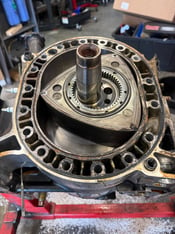 The Compression Problem | why the engine isn't running well
A compression test quickly revealed that the rear rotor was significantly down on compression, making the engine unsuitable for reliable road use.
The customer has owned and enjoyed this car for many years, so preserving the vehicle while returning it to proper performance was important. While the car itself needed some attention after years of storage, it remained in remarkably good condition, and the body had held up exceptionally well for its age.
What We Found During Teardown
Once the engine was removed and disassembled, the findings were interesting.
The rotor housings were in remarkably good condition, and the rotors themselves showed no significant damage. At first glance, there was no obvious reason for the poor compression numbers we had measured.
As we continued through the teardown, the cause finally revealed itself.
Why Stuck Side Seals Cause Problems
The root cause turned out to be stuck side seals.
These early 12A engines use twice as many side seals as later Mazda rotary engines, with a total of 24 side seals throughout the engine. During inspection, it became apparent that the side seal clearances were too tight.
After years of light use followed by decades of sitting, carbon deposits filled the small clearances and effectively locked the seals in place. Once stuck, they could no longer move freely or maintain proper sealing against the rotor housings, resulting in the compression loss we observed.
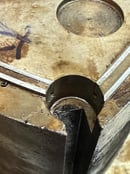 The side seals themselves were not necessarily the problem. Replacing them with new components is straightforward. The larger challenge was what we discovered next.
Parts Availability Challenges | Getting it right
These early engines use 6mm apex seals with a unique flat-style spring design. New apex seal springs for these applications are becoming increasingly difficult to source.
Could we have reused the originals? Possibly.
However, after decades of heat cycles and age, spring tension is often no longer what it once was. When rebuilding an engine that a customer expects to enjoy for years to come, reusing critical sealing components becomes a difficult decision.
Parts availability is one of the biggest challenges when rebuilding these early rotary engines. As Mazda replacement parts disappeared years ago on these engines, builders have increasingly had to adapt and find solutions that preserve reliability while maintaining the character of the original engine. Good thing we can still access the 73-85 12A parts (not all, but apex seals, springs, etc).
Updating for Long-Term Reliability
To provide a better long-term solution, we elected to upgrade to later-model rotor assemblies from the 1980s. Having spare 12A parts around is a good thing.
This approach improves parts availability while providing better sealing characteristics and increased durability. It allows the customer to continue enjoying the vehicle without relying on components that are becoming nearly impossible to replace.
Since the engine was already apart, we also recommended updating the front cover and ignition system to the later single-distributor configuration.
The original dual-distributor system was still functional, but sourcing replacement distributor caps and related ignition components has become increasingly difficult. While points and basic ignition service parts remain available, building a fresh engine around hard-to-find ignition components can create future maintenance problems that are easily avoided during the rebuild process.
Add to that, it was necessary to replace the original '71 type oil cooler with one (that didn't leak), offered up better cooling and long term performance, we chose to replace it with a FC second generation Rx7 oil cooler, larger, thermostatically controlled, proper -10AN lines and fittings and locate it in a better position for good air flow.
Sometimes the best restoration decision is not maintaining every original component, but making thoughtful upgrades that preserve the spirit of the vehicle while improving long-term serviceability.
Building the Entire Package
When restoring one of these early rotary engines, our goal is not simply to make it run again.
The objective is to return the engine to OEM performance—or better—while ensuring the supporting components remain reliable and serviceable for years to come.
Every project requires balancing originality, reliability, performance, and budget. Sometimes the best solution is preserving original components. Other times, carefully selected upgrades provide a better long-term outcome for the owner.
That is why we approach each rotary engine rebuild as a complete package. Identifying weak links before they become future problems allows us to deliver an engine that performs as expected and can continue to be enjoyed for years to come.
Whether it is a first-generation RX-7, an RX-2, RX-3, RX-4, REPU or in this case a rotary-powered Thunderbird replica, the goal remains the same: preserve what makes these cars special while ensuring they can continue to be driven and enjoyed for many years ahead. Click on the button to connect with us and learn more.

Topics: 12A, vintage racing 12A, 12A Rotary Mazda RX-7 Vintage Racing