


 Rotary Engine Rebuilds: Why Most “Fixes” Turn Into Full Builds (And What a Proper Shop Actually Does)
If you’re researching a rebuild for a Mazda RX-8 or Mazda RX-7, the starting point is usually simple:
“Fix what’s wrong and get it running right.”
Here’s the reality.
Most rotary engines don’t fail in isolation. By the time symptoms show up—low compression, hard starts, overheating—the damage has already spread across multiple systems.That’s why what starts as a repair often becomes a full build.
The conversation most shops skip
A proper build doesn’t start with parts. It starts with clarity.
-
What actually failed—and when?
-
How long was it driven with symptoms?
-
Is the goal reliability, power, or restoration?
A stock street FC is not the same as a modified FD. Without defining the goal, the build has no direction.
- What compression testing doesn’t tell you
- Compression testing matters. But it doesn’t define the scope.
- Low numbers confirm a problem. They don’t explain how far it’s gone.
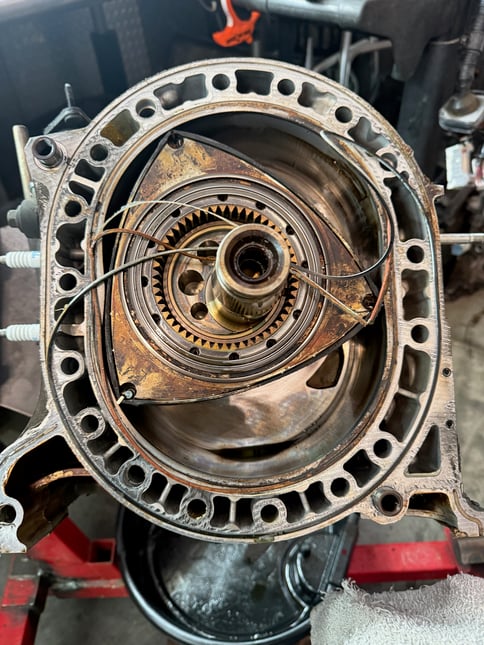
What we routinely see during tear-down:
- Rotor housings heat-cycled beyond usable limits
- Early bearing wear
- Oil control issues
- Cooling system inefficiencies
Compression is the starting point—not the answer.
- Tear-down is where the truth shows up
- This is where expectations change.
- Once the engine is opened, the question shifts from:
- “Can we fix it?”
to:
“What’s actually still usable?”
A proper process includes:
- Clear tear-down photos, as I break the motor down, how it comes apart and the signs (from doing many gives me the reality I need, what and why). This I share in detail.
- What’s in spec vs out of spec
- Identification of the root failure
- What damage followed from it
At REspeed, most builds shift here—from partial repair to full rebuild—because the condition of the components makes the decision clear.
Why “rebuild kits” don’t define a build
There’s no universal rebuild.
A real scope separates:
- Wear components (seals, springs, gaskets)
- Bearings and rotating assembly
- Housing condition and reuse viability
- Supporting systems: cooling, ignition, oiling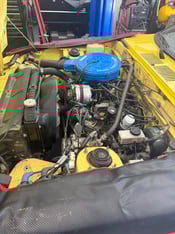 The key point:
- Supporting systems are often what caused the failure.
- Ignoring them is how engines fail again.
- Where most rotary builds go wrong
- Not in parts—in process.
Common issues:
- Incomplete inspection
- Reusing marginal components
- Poor cooling system performance
- Lack of documentation
- Assembly shortcuts
This is where the “unreliable rotary” reputation actually comes from.
The cost reality
This is where expectations usually break down.
A proper rebuild—focused on reliability—typically lands in:
$12K–$15K for Mazda RX-8 builds
$15K–$25K+ for Mazda RX-7 builds
That includes more than internals. It addresses the system as a whole so the engine doesn’t fail again.
If you’re trying to stay below that range, the approach changes—and so does the outcome.
Start-up, break-in, and aftercare
Assembly is only part of the build.
What matters just as much:
- Controlled first start
- Proper break-in process
- Monitoring temps and behavior early
- Ongoing support if something feels off
This is where good builds prove themselves | Rotary Engine Shop Colorado
How to approach your next step
If you’re early in the process, don’t start with quotes.
Start with clarity:
- What likely failed
-
How far the damage spread
-
What your actual goal is
From there, the scope—and the cost—becomes logical.
Next step
If you want a clear direction before committing to a build, submit your vehicle details, current symptoms, and goals through our intake form.

From there, we’ll outline likely failure points, recommended next steps, and a realistic cost range based on your setup.
Topics: 12A, Colorado Rotary Engine shop, 13b, rx8 builds, RX7 Engine Build